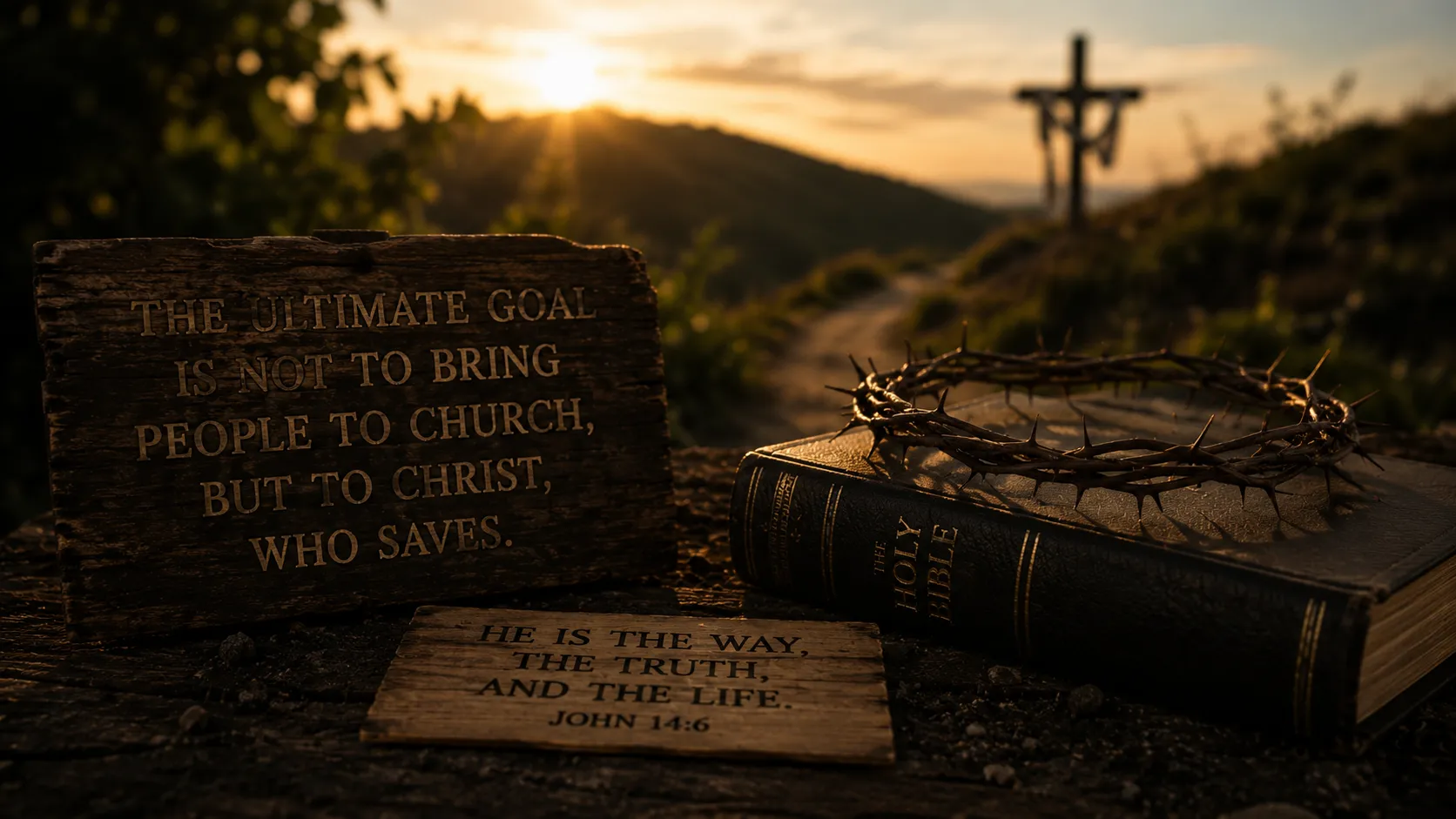
The ultimate goal is not to bring people to church, but to Christ, since He is the only one who can save us. It is the finished work of Jesus that saves and redeems us, not our own good works. After all, the reason we bring people to church is to bring them to Christ; that is the end goal. Going to church is no guarantee of salvation, just as it is no guarantee of true repentance and faith in Jesus. However, those who truly repent and believe in Jesus experience a change of heart, causing them to go to church cheerfully rather than compulsively. This is not something we can force upon someone who is not yet born again, as it requires spiritual regeneration—the work of the Holy Spirit. As Jesus said, no one can come to Him unless the Father draws them. We are not the ones who choose who comes to Jesus; the Father is. We are not the ones who redeem or save them; the Son does. And we are not the ones who make them born again; the Holy Spirit does. It is entirely the work of the Triune God, not our own.
We cannot force someone against their will to do things they do not want to do unless there is a change of heart, desire, and volition to do what pleases God. It is God's work that gives us a new heart and spirit to know, desire, and carry out His will through the Holy Spirit.
As Jesus said, the only "work" required of us is to believe in Him. Yet, people cannot believe in Jesus unless the Father draws them to Him. Therefore, even our act of believing is the work of the Father. It is God's work, not ours. Repentance and faith are not our own doing; they are gifts from God. It is by His grace that we have been saved, so that no one can boast.
This prevents us from boasting about our own efforts—such as going to church in the belief that it can save us—or taking credit for convincing someone else to attend. Ultimately, we are merely co-workers in God's work. He is the one who initiates the work, not us. He chose us to be His co-workers; we did not choose Him or decide on our own to do His work.
We do not authorize ourselves to do His work; He does. Even if we do things "for the Lord," if He does not approve of them, our work will not be acknowledged by Him. This is why not everyone who invokes the name of the Lord and does things in His name—like King Saul—truly pleases Him, but only those who do the will of the Father. And the Father's will is that we believe in His Son.
Of course, this is not just about intellectual knowledge of who God is. As James noted, even the demons believe in God and tremble, yet they do not do the Father's will. This aligns perfectly with James' statement that genuine faith in God results in action. The writer of Hebrews illustrates this using the faith of Abraham, and Samuel told King Saul that obedience is better than sacrifice. Therefore, genuine faith in God results in obedience, leading us to put our active belief in His Son, Jesus, rather than relying on ourselves to be saved and made right before God.
Clearly, we must know and do the will of the Lord. Otherwise, we may end up doing things He hates, even while claiming to do them for Him, because our actions do not align with what genuinely pleases Him.
This is why Jesus taught us to pray for the Father's will to be done. Ultimately, our prayers should center on His will, not our own. We can only truly know the Father's will when the Holy Spirit illuminates our minds to the truth, bringing about spiritual regeneration and a change of heart that enables us to understand, desire, and possess the power to do what pleases Him. In the end, it is entirely the work of the Spirit of Truth—the work of God, and not our own.